Why Most Yogurt in Sri Lanka Isn’t Actually Greek Yogurt
There’s a quiet problem in the yogurt aisle in Sri Lanka.
Products labelled “Greek style”, “Greek inspired” or even just “Greek yogurt” are appearing on more and more supermarket shelves — but many of them have very little in common with authentic Greek yogurt.
They’re thickened with starch, stabilised with gums, and preserved with additives that real Greek yogurt simply doesn’t need. Some even add sugar to mask the naturally tangy flavour that comes with genuine fermentation — because most Sri Lankan consumers aren’t yet accustomed to that tartness. And because many of these products get returned by customers who find the taste unfamiliar, supermarkets often stack them heavily despite having no reliable way to guarantee re-dating. That means what’s on the shelf isn’t always as fresh as it looks.
If you’re buying Greek yogurt in Sri Lanka because you want something clean, high-protein and genuinely healthy, it pays to know exactly what you’re looking at.
This guide will help you tell the difference.
What Real Greek Yogurt Actually Is
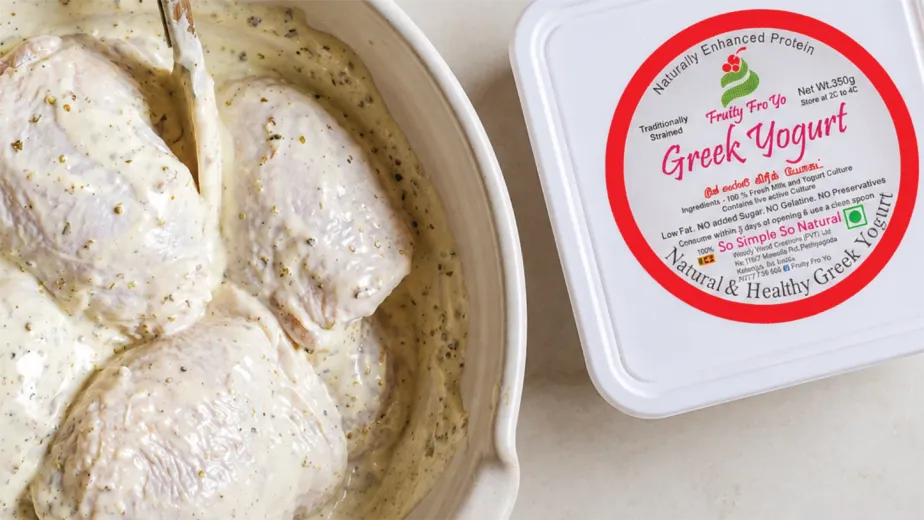
Authentic Greek yogurt is made from milk and live cultures — and nothing else.
The magic is in the straining. After fermentation, the yogurt is ladled into fine cloth or a specialised filter and left to drain slowly, sometimes for many hours. This isn’t a quick mechanical step — it’s a patient process that gradually separates the liquid whey from the solid curd. The longer and more thoroughly the yogurt is strained, the thicker, creamier and more protein-dense the result.
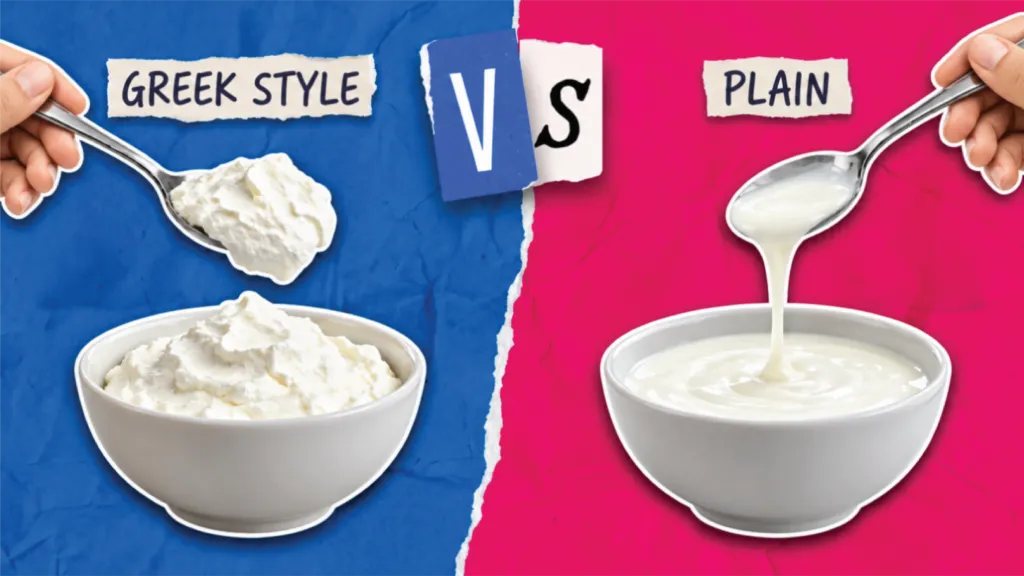
This careful straining is what creates that signature thick texture — the kind a spoon can stand up in. It’s also what concentrates the protein naturally, reduces the lactose and sugar content, and gives real Greek yogurt its clean, slightly tangy flavour profile.
Real Greek yogurt has a short ingredient list: milk, live bacterial cultures. That’s it. It has a shorter shelf life than commercial products (typically 2–3 weeks refrigerated) because it contains no preservatives. And it’s naturally thick because of straining — not because of added thickeners.
What “Greek Style” Usually Means
When you see “Greek style” on a yogurt label in Sri Lanka, it almost always means the product has been thickened artificially to mimic the texture of real strained yogurt.
Common additives used to achieve this include:
- Modified starch — a cheap thickening agent that adds bulk without nutrition
- Carrageenan — a seaweed-derived stabiliser that creates a gel-like texture
- Gelatin — added to set the yogurt and improve mouthfeel
- Guar gum or xanthan gum — texture stabilisers used in processed foods
- Added sugar — to balance the sharper taste that comes with genuine fermentation, since many consumers in Sri Lanka aren’t accustomed to the natural tanginess of real Greek yogurt
These ingredients are not inherently dangerous in small amounts, but they tell you something important: the manufacturer didn’t invest in the real straining process. They took a shortcut.
And the result is a product that looks like Greek yogurt but doesn’t deliver the same nutritional benefits.
- Modified starch — a cheap thickening agent that adds bulk without nutrition
- Carrageenan — a seaweed-derived stabiliser that creates a gel-like texture
- Gelatin — added to set the yogurt and improve mouthfeel
- Guar gum or xanthan gum — texture stabilisers used in processed foods
- Added sugar — to balance the sharper taste that comes from artificial thickeners
The Shelf Life Test
Real Greek yogurt made without preservatives has a relatively short shelf life — usually 2–3 weeks when refrigerated correctly.
If a “Greek yogurt” product you’re looking at has a shelf life of 2–3 months, ask yourself how that’s possible without preservatives.
At Frutty Fro Yo, we make every batch weekly and deliver in small quantities to ensure zero compromise on freshness. Our shorter shelf life isn’t a weakness — it’s proof that what you’re eating is genuinely fresh, genuinely natural, and genuinely good for you.
The Ingredient List Test
Flip the container around and read the ingredient list.
Real Greek yogurt should list: whole milk (or pasteurised milk), live cultures. That’s two ingredients. Maybe three if there are multiple culture strains listed separately.
If you see: milk, modified starch, gelatin, sugar, natural flavouring, carrageenan, potassium sorbate — you’re not holding Greek yogurt. You’re holding a processed dairy product that has been designed to look and feel like Greek yogurt.
Does It Matter?
It matters if you’re buying Greek yogurt for a specific health reason — weight management, fitness, gut health, or feeding it to your children or babies. The nutritional gap between real strained Greek yogurt and a thickened imitation is significant.
It also matters if you care about what goes into your body. Preservatives, stabilisers and added sugars are everyday ingredients in processed food, but they don’t belong in something as simple and clean as yogurt made from milk and cultures.
Where to Find Real Greek Yogurt in Sri Lanka
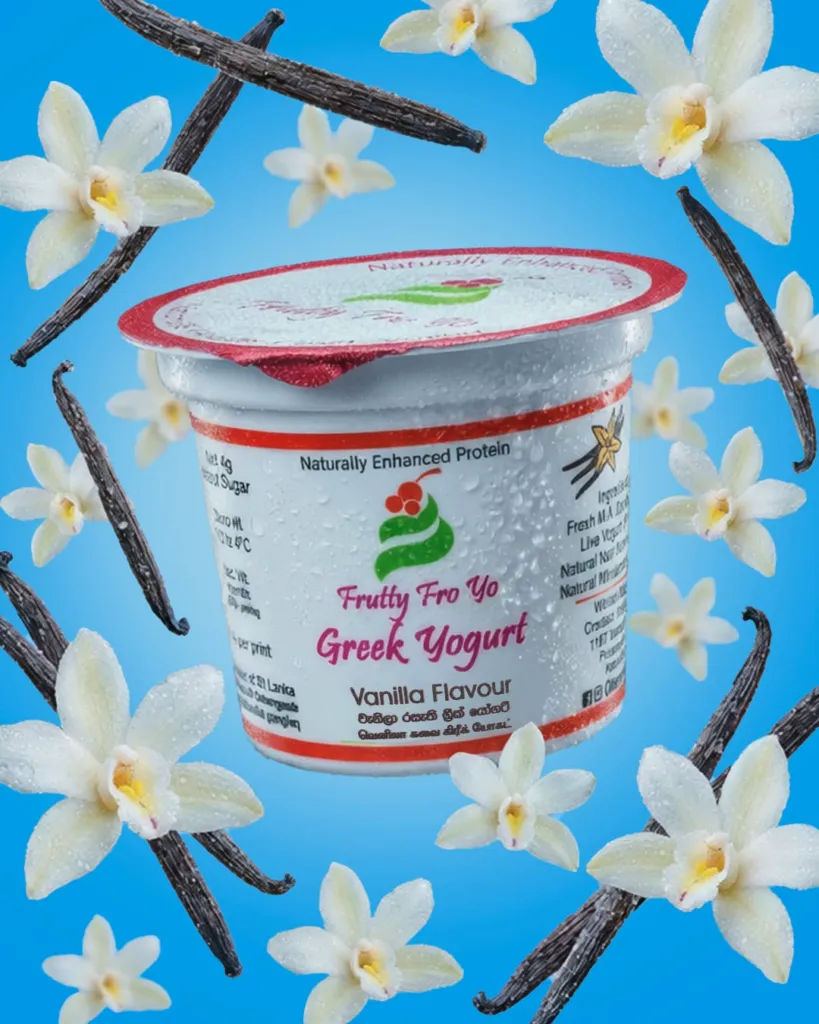
Frutty Fro Yo is Sri Lanka’s authentic family-made Greek yogurt: thick, strained the traditional way, made fresh every week from pure local milk with zero preservatives and zero additives. Lab-tested every batch, trusted by families, gym-goers and healthcare professionals across the country.
Find us at Spar, Cargills Food City, Softlogic Glomark, Arpico, Celeste and Online Kade, or message us directly on WhatsApp for doorstep delivery and bulk orders.
Next time you’re in the yogurt aisle, you’ll know exactly what to look for.
Real Greek yogurt. Real ingredients. Real results.
The contents of this website are for educational purposes and are not intended to offer personal medical advice. You should seek the advice of your physician or other qualified health provider with any questions you may have regarding a medical condition. Never disregard professional medical advice or delay in seeking it because of something you have read on this website.